Home »
Articles
ANCEL L8000 Automotive Smoke Leak Detector | Dual Mode Diagnostic for EVAP & Turbo Systems
Last updated : May 20, 2026
Modern vehicles rely on sealed systems for performance, fuel efficiency, and emissions control. Even small leaks in vacuum lines, intake hoses, or EVAP systems can cause poor acceleration, check engine warnings, reduced turbo boost, and higher fuel consumption; such issues are often difficult to detect visually.
Smoke leak detector is widely considered one of the most effective methods for locating sealed-system leaks in automotive diagnostics. A smoke leak detector introduces the visible vapours into the target system under controlled pressure. This method is commonly used for EVAP (Evaporative Emission Control System) diagnostics and other sealed-system leak checks.
A small leak in the purge valve, vapor hose, or fuel cap sealing system may trigger EVAP-related fault codes or emissions warnings.
In this article, the ANCEL L8000 Automotive Smoke Detector will be discussed, including its dual diagnostic modes.
What is the ANCEL L8000 Automotive Smoke Leak Detector?
The ANCEL L8000 Automotive Smoke Leak Detector is a professional automotive leak detection tool designed to locate leaks in vehicle systems using visible smoke under pressure. Instead of relying on manual inspection or guesswork, this device helps users quickly identify leaks in the system. Where escaping air or vapor may be contributing to performance or emissions-related issues.
Now the question arises: what makes the L8000 notable?
The answer is simple: its dual-mode diagnostic capability. Compared with simple smoke machines designed specifically for EVAP testing, the L8000 supports both low-pressure EVAP diagnostics and high-pressure turbo/intake leak detection. The ANCEL L8000 is designed for low-pressure EVAP testing and higher-pressure intake/turbo leak diagnostics, with pressure ranges varying based on operating mode and test setup.
How the ANCEL L8000 Works
The ANCEL L8000 is built to simplify professional leak diagnostics by combining smoke generation, air-pressure control and dual testing modes in one unit. Compared with smoke testers that rely on an external air compressor, the L8000 includes a built-in air pump, making it practical for workshop and mobile use.
- Power Connection: The unit is connected to the 12V vehicle battery, allowing it to operate independently without any external workshop air systems. This act makes onsite diagnostics easier.
- Built-In Air Pump Operations: The integrated air pump helps provide airflow for smoke delivery and controlled leak testing. It helps eliminate the need for any additional compressed-air equipment. This also improves portability and reduces setup complexity.
- Smoke generation: The diagnostic fluid inside the machine is heated to produce dense visible vapor for leak detection. This vapor is then introduced into the target automotive system under controlled conditions. The vapor travels through the sealed system, and visible leakage may appear at the point of pressure loss or sealing failure.
- Dual Diagnostic Modes: The dual diagnostic mode is the standout feature of the L8000.
- EVAP Low-Pressure Mode: This mode is designed for sensitive emission systems where excessive pressure
- Turbo High-Pressure Mode: These are used for the turbocharger, intercooler and boost-pressure leak detection
- Pressure and time management: Depending on the selected operating mode, users can monitor and manage testing duration and pressure conditions during leak diagnostics.
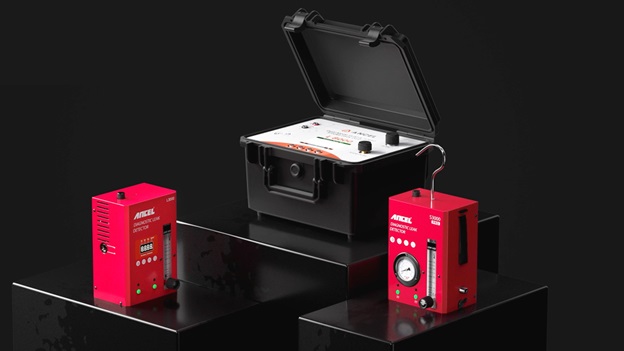
Why the ANCEL L8000 Stands Out with Dual-Mode Diagnostic Capability
After understanding how the ANCEL L8000 works, the next step is to see what makes it more capable than any other conventional smoke leak detector. One of the key advantages of the L8000 is its dual-mode leak testing design, which allows the machines to safely test both the emission system and the high-pressure intake or turbo systems.
Another amazing feature of the L8000 is the clear separation of the EVAP low-pressure and high-pressure functions. Many entry-level smoke machines are primarily designed for EVAP and basic leak testing applications, limiting their usefulness for broader automotive troubleshooting.
Why Dual-Mode Testing Matters
The L8000 is designed to support multiple automotive leak testing applications when used with appropriate pressure settings and procedures.
- Low-pressure diagnostics are ideal for EVAP emission systems, fuel-vapour containment checks, sensitive leak verification, and regulatory emission troubleshooting.
- High-pressure diagnostics are suitable for turbocharged intake systems, intercooler plumbing, boost pressure leak checks, and vacuum and manifold leak testing.
It is important to choose the correct pressure range because incorrect testing conditions may cause the operation to fail.
Capability Comparison Table
|
Feature Area
|
Standard Smoke Tester
|
ANCEL L8000
|
|
EVAP Leak Testing
|
Yes
|
Yes
|
|
Turbo Boost Leak Testing
|
Limited/not always
|
Yes
|
|
Adjustable Pressure Testing
|
Often basic
|
Advanced
|
|
Multi-System Flexibility
|
Limited
|
Broad compatibility
|
|
Workshop + Mobile Use
|
It depends on the external air supply
|
Built-in air pump
|
Key Automotive Systems ANCEL L8000 Can Diagnose
With a proper understanding of diagnostic flexibility, it is important to see how that capability translates into real-world vehicle diagnostics. As modern automotive systems depend on airtight pressure pathways, a small leak can affect performance, fuel economy, and emissions compliance.
Primary Diagnostic Applications
Here are some of the essential primary diagnostic applications for ANCEL L8000:
- EVAP Emission System: The evaporative emission system prevents fuel vapours from escaping into the environment. Small leaks in holes, valves, or seals may trigger the check engine light and emissions-related trouble codes.
- Turbocharger and Boost Systems: The turbocharged engine relies on sealed boost pathways; a leak can reduce boost pressure, leading to poor acceleration and underperformance.
- Vacuum Systems: Vacuum leaks can sometimes be difficult to identify because their symptoms may resemble fuel or ignition-related issues, because their symptoms often mimic fuel and ignition issues.
Common Symptoms by System
While many vehicle diagnostic failures are caused by software or sensor-related problems, hardware reliability inside automotive modules also plays an important role. Poor electrical connections, vibration, heat cycling, and manufacturing flaws can create intermittent communication errors that are difficult to diagnose. In some cases, common PCB soldering defects such as cold solder joints, solder bridges, insufficient wetting, cracked solder connections, or lifted pads inside ECUs and control modules may lead to unstable signals, sensor faults, or unexpected module communication failures.
|
Vehicle System
|
Common Symptoms Observed
|
|
EVAP System
|
Check engine light, fuel vapour smell, emission failure
|
|
Turbo System
|
Power loss, delayed acceleration, and underboost codes
|
|
Vacuum Network
|
Rough idle, unstable rpm
|
|
Intercooler Plumbing
|
Weak boost response, inefficient airflow
|
|
Intake Manifold
|
Lean mixture behaviour, poor drivability
|
Real-World Diagnostic Application of ANCEL L8000
The hidden leaks often cause vague symptoms that can be attributed to sensor failures, delivery problems, or mechanical faults. The ANCEL L8000 helps technicians move from assumptions to diagnosis. Its dual-mode design allows it to be used across various real-world troubleshooting scenarios.
EVAP Emissions Diagnostic
The small leaks in the evaporation system might trigger check engine warnings and failed emissions inspections. Smoke testing helps technicians visually identify potential leak locations in various seals, canisters, and valves. This may help reduce unnecessary parts replacement during EVAP diagnosis.
Diagnosing a check engine light with no obvious cause
The vehicle may show a clear check engine warning with EVAP-related trouble codes, but during a visual inspection, nothing is obvious.
Smoke testing helps verify hidden vapour hose cracks, leaking purge valves, damaged fuel tank seals, and loose EVAP connections. So instead of replacing multiple emission parts, technicians can often narrow down the source of the leak before replacing components.
Confirming Repair Quality After Component Replacement
Leak diagnostics are useful, as technicians often verify sealing integrity after the intake manifold replacement, turbo hose installation, and servicing of vacuum and emissions components.
Solving Rough Idle with no clear Sensor Failure
The vehicles exhibit an unstable idle or hesitation without any clear component failure. In such cases, the issue may be due to intake gasket leakage, vacuum hose deterioration, PCV system leaks, and throttle body seal failure. Smoke testing can help identify possible sources of unmetered air entering the intake system.
Safety and Accuracy Considerations for Effective Leak Testing
Effective leak diagnosis depends on selecting appropriate pressure modes, properly sealing the target system, and allowing sufficient smoke to circulate to reveal the faults. As the ANCEL L8000 supports both EVAP testing and turbo diagnostics, the correct approach is to improve reliability and protect vehicle components.
|
Testing Considerations
|
Why it Matters
|
|
Correct pressure selection
|
Prevents damage to sensitive systems and improves accuracy
|
|
Proper system sealing
|
Avoids false leak indications from open pathways
|
|
Adequate smoke circulation time
|
Helps to detect micro leaks in larger systems
|
|
Post-repair retesting
|
Confirms leakage has been resolved
|
|
Clean the hose and adapter connections
|
Ensure stable pressure delivery during diagnostics
|
|
Appropriate mode selection (EVAP/Turbo)
|
Matches testing conditions to system requirements
|
Conclusion
The ANCEL L8000 Automotive Smoke Leak Detector is designed to clearly detect hidden automotive leaks that are normally concealed from conventional inspection. Its dual-mode EVAP and turbo leak testing design, built-in air pump, and smoke-based leak detection capability make the L8000 suitable for a wide range of automotive leak testing scenarios. It is an ideal tool for leak detection and repair verification for workshops, mechanics, and serious DIY users.