Home »
Articles
Foxwell NT710 Bi-Directional Scan Tool | Enhanced Full System Diagnostics
Last updated : May 21, 2026
Over the past few decades, vehicle diagnostics have changed a lot. Nowadays, cars depend not only on mechanical components but also on electronic control modules, sensors, communication networks, and software-managed systems.
The Foxwell NT710-Bi-Directional Scan Tool is designed to bridge the gap between basic scanners and professional diagnostic platforms. It offers advanced troubleshooting capabilities and active component testing that many standard OBD2 tools don't provide.
The article is about the Foxwell NT710, what it is as a vehicle diagnostic tool and the real-world value it provides.
What is the Foxwell NT710 Bi-Directional Scan Tool?
The Foxwell NT710 is an advanced automotive diagnostic scanner built for users who need more than basic engine code reading. Compared to basic OBD2 code readers that mainly focus on engine and emissions-related diagnostics, the NT710 is designed to access multiple vehicle systems and provide in-depth diagnostics.
The Foxwell NT710 goes far beyond basic fault code reading by supporting active tests, live data monitoring, and advanced system diagnostics. It allows users to interact with supported vehicle modules, monitor live operating data, and run active tests on various electronic components. The device combines advanced aftermarket diagnostic functionality in a compact tablet form, making multi-system diagnostics more accessible for repair shops and experienced DIY users.
Core Hardware and System Specifications
Any diagnostic tool depends on software capabilities and up-to-date hardware. It helps provide faster navigation, smoother menu transitions, and reliable battery performance. The Foxwell NT710 uses a modern Android-based platform, which helps to improve the responsiveness. This updated version helps users navigate the complex vehicle system more efficiently. A table represents hardware features and their specifications.
|
Hardware Feature
|
Specification
|
|
Display
|
5.5-inch Touchscreen
|
|
Operating System
|
Android 9.0
|
|
Extended Storage
|
32GB Micro SD Card
|
|
Connectivity
|
Wi-Fi
|
|
Power Source
|
Rechargeable battery
|
|
Software Updates
|
Wireless support
|
|
Interface Type
|
Touchscreen Tablet design
|
Understanding Bi-Directional Control
Bi-directional control is an important feature that distinguishes advanced diagnostic tools from ordinary code readers. Some buyers just see this as a term but don't understand it. A traditional scanner receives information from the vehicle. It can read the codes, display data, and clear any faults. But a bi-directional scanner also sends commands back to supported vehicle systems. Here are some examples of how NT710 actively commands specific components to perform functions for testing purposes:
- Turn cooling fans on/off,
- Activate fuel pumps,
- Run EVAP system tests,
- Perform throttle response tests and basic ABS component active tests (functions vary by supported vehicle brands and models)
These functions help technicians test the component to see whether it responds physically, rather than assuming failure based on error codes alone.
Why Enhanced Diagnostics Matter
The aftermarket tools may not offer every brand-specific factory function, but advanced tools can still access deeper vehicle data than the basic code reader.
With broad enhanced diagnostic coverage, supported vehicles may provide access to the following functions:
- Manufacturer-specific trouble codes
- Expanded module communication data on supported vehicle systems
- Enhanced live sensor readings
- Selected system adaptation and relearn functions
- Selected calibration and reset procedures supported on compatible vehicles
- Detailed freeze frame information
In the case of electronically controlled vehicles, deeper system access can help improve diagnostic efficiency and provide more detailed fault information during troubleshooting.
Advanced service and Maintenance functions
Modern vehicles require electronic procedures for service after routine maintenance. So replacing the component is part of the process, and the vehicle also needs calibration or reset functions. Here, advanced features add major practical value. Some of the common supported service functions include the following practical purposes.
|
Service Function
|
Practical Purpose
|
|
Oil Reset
|
Clear maintenance reminder
|
|
EPB (Electronic Parking Brake) Reset
|
Enable brake servicing
|
|
Battery Registration
|
Registers new battery installation
|
|
ABS (Anti-Lock Braking System)
|
Brake hydraulic servicing support
|
|
TPMS (Tire Pressure Monitoring System)
|
Tire pressure system calibration
|
|
DPF (Diesel Particulate Filter)
|
Supports diesel particulate filter maintenance.
|
|
Injector Coding
|
Fuel injector configuration
|
|
Throttle Adaptation
|
Relearn throttle behaviour
|
Real Workshop Diagnostic Applications
A scan tool is known for its effectiveness in solving repair problems. Foxwell NT710 is best suited for users who primarily diagnose one supported vehicle brand at a time. Users need to purchase additional brand software separately if they need to diagnose other car series. Here are some repair scenarios and how efficiently the NT710 helps:
|
Repair Scenario
|
How NT710 Helps
|
|
Misfire Diagnosis
|
Live ignition, fuel trim, and sensor data monitoring
|
|
ABS (Anti-Lock Braking System) warning light
|
Sensor testing and code retrieval
|
|
DPF (Diesel Particulate Filter) warning light
|
Regeneration support
|
|
Cooling fan failure
|
Active component activation
|
|
Electronic handbrake service
|
EPB (Electronic Parking Brake) maintenance mode
|
|
Airbag warning diagnosis
|
SRS fault access
|
|
Steering Calibration
|
SAS reset functionality
|
Such situations help to understand common workshop diagnostic needs rather than theoretical features. While many vehicle diagnostic failures are caused by software or sensor-related problems, hardware reliability inside automotive modules also plays an important role. Poor electrical connections, vibration, heat cycling, and manufacturing flaws can create intermittent communication errors that are difficult to diagnose.
Some users are unsure whether they need a professional-grade scanner when there is already a low-cost OBD2 scanner tool
, solder bridges, insufficient wetting, cracked solder connections, or lifted pads inside ECUs and control modules may lead to unstable signals, sensor faults, or unexpected module communication failures.
Comparison of Foxwell NT710 with Basic OBD2 Code Reader
Some users are unsure whether they need a professional-grade scanner when there is already a low-cost OBD2 scanner tool. The answer is simple: it depends entirely on the diagnostic need and the level of vehicle access required.
Users who need an occasional engine code check need a simple OBD2 reader. However, for mechanics, workshops, or drivers dealing with modern electronically controlled vehicles, a professional scanner like the Foxwell NT710 is needed.
Here is a comparison between the basic OBD2 reader and Foxwell NT710 capabilities:
|
Capability
|
Basic OBD2 Reader
|
Foxwell NT710
|
|
Engine Code Reading
|
Yes
|
Yes
|
|
Code Clearing
|
Yes
|
Yes
|
|
ABS Diagnostic
|
No/Limited
|
Yes
|
|
Air Bag Diagnostic
|
No
|
Yes
|
|
Full System Scanning
|
No
|
Yes (Only for its matched single vehicle brand)
|
|
Live Advanced Data
|
Limited
|
Extensive
|
|
Active Test
|
No
|
Yes
|
|
Service Test
|
Rare
|
Yes
|
|
Module Communications
|
Limited
|
Broad
|
Strengths of Foxwell NT710
A well-balanced evaluation highlights the capabilities and the practical benefits. The Foxwell NT710 has strengths for users who need deep diagnostics.
- Strong Diagnostic Depth: The ability to access multiple vehicle systems makes it useful. This strength allows users to investigate the complex faults.
- Active Test Capability: The Bi-Directional control improves the diagnostic accuracy by enabling component testing. This helps to reduce the guesswork and clearly shows which part is functioning properly.
- Service Function Versatility: All maintenance-related procedures fall under this service, as it adds practical workshop value and makes it easier for technicians to handle vehicles.
- Modern Interface: The sleek touchscreen design improves usability compared to older versions and speeds up navigation by reducing learning friction.
- Improved Diagnostic Accuracy: Basic scanners provide generic trouble codes without sufficient context. This leads to unnecessary assumptions and incorrect part placements. But the NT710 improves the repair accuracy by combining the fault code access, system-level diagnostics, and real-time component verification.
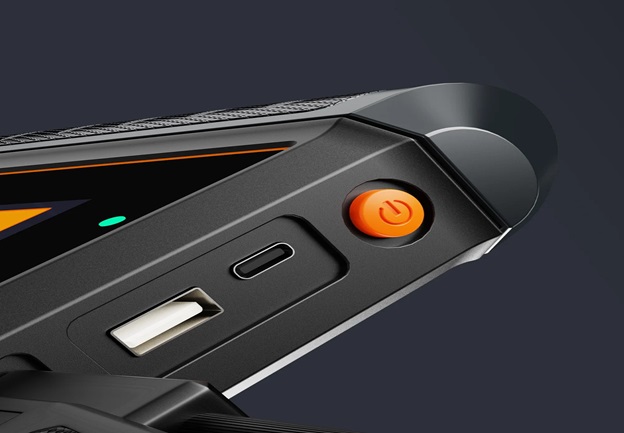
Who Should Buy the Foxwell NT710?
The NT710 makes it easy for users who regularly need to interact with vehicle diagnostics beyond simple fault code clearing. It may be excessive for the drivers who only want to clear occasional engine warning lights.
The ideal user who should buy the Foxwell NT710 includes:
- Small workshop owners: The small repair business needs a versatile diagnostic solution. The Foxwell NT710 offers a balance between advanced functionalities and cost-effectiveness, making it a practical choice for workshops.
- Independent mechanics: The independent mechanics work on various vehicles and face diverse diagnostic challenges. The NT710 provides multi-system scanning, active testing, and maintenance functions that help users troubleshoot supported vehicle systems more efficiently.
- Advanced DIY repair enthusiasts: Experienced vehicle owners who prefer to repair their own vehicles need the NT710 for its deep diagnostic capabilities. So instead of relying on the entry-level scanner, they need proper system-level diagnostics, live data monitoring, and supported maintenance functions.
- Used-vehicle inspectors: electronic faults are not visible during a physical inspection. The used car inspector uses the NT710 to scan multiple vehicle systems for hidden codes, communication errors, airbag faults, and ABS issues.
- Fleet maintenance technicians: They manage multiple commercial or business vehicles, requiring quick diagnostics and efficient fault isolation. Here, NT710 helps the fleet technician monitor vehicle health, identify electronic faults early, and reduce vehicle downtime.
Conclusion
The Foxwell NT710 Bi-Directional Scan Tool has many advantages, like full system access, active testing, live data analysis, maintenance support, and broader diagnostic depth. From technicians, workshop owners, and fleet maintenance technicians, the Foxwell NT710 provides a capable and practical diagnostic solution.