Home »
Articles
The Golden Age of Computing: A Look Back at the Machines That Started It All
Last updated : October 25, 2025
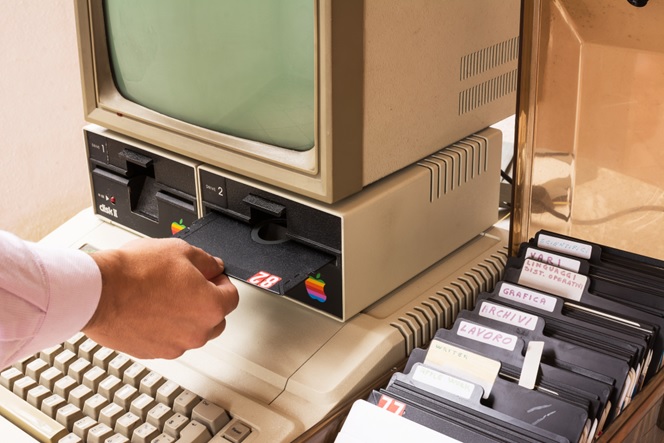
Before sleek laptops, smartphones, and cloud computing became part of daily life, there was an era defined by hum, whir, and wonder—the Golden Age of Computing. It was a time when computers weren't everyday appliances but engineering marvels that filled rooms, flickered with blinking lights, and captured the imagination of scientists, hobbyists, and dreamers alike.
From the mid-20th century through the 1980s, computing evolved from arcane experiments to household reality. It was a period driven by curiosity, innovation, and the belief that machines could unlock the future. Looking back, it's clear that this era wasn't just about circuits and code—it was about people daring to imagine what technology could become.
The Dawn of the Machine Age
The story of computing begins long before silicon chips and graphical interfaces. The early 20th century saw mechanical and electromechanical devices paving the way for digital logic. Machines like the Harvard Mark I and ENIAC (Electronic Numerical Integrator and Computer) were monumental in both scale and ambition.
Completed in 1945, ENIAC weighed 30 tons and used over 17,000 vacuum tubes. It was the first general-purpose electronic computer, capable of performing complex calculations in seconds that would have taken humans days. Though primitive by today's standards, ENIAC marked the turning point—it showed that electronic computation was not just possible but powerful.
Soon after, the UNIVAC I (Universal Automatic Computer) became the first commercially available computer in the early 1950s. It wasn't just a scientific tool—it was a product. For the first time, businesses could own machines that performed data processing, forecasting, and analysis. The modern computing industry was born.
The Transistor Revolution
Vacuum tubes were powerful but fragile, hot, and inefficient. The invention of the transistor in 1947 at Bell Labs changed everything. Transistors were smaller, faster, and far more reliable. By the late 1950s, they were replacing vacuum tubes in new machines, leading to the second generation of computers.
Systems like the IBM 1401 became icons of business computing. They introduced modular design, magnetic tape storage, and assembly language programming—features that made computers more accessible to industry and government users. The transistor didn't just shrink machines; it expanded possibilities.
For the first time, computing began to touch fields like banking, engineering, and education. The transistor set the stage for the next great leap: the microchip.
The Birth of the Microprocessor and the Personal Computer
In 1971, Intel released the 4004, the world's first commercial microprocessor. It was a small silicon chip that contained the processing power of an entire computer circuit. This invention didn't just revolutionize electronics—it democratized computing.
Suddenly, it was possible to build computers small enough and affordable enough for individuals to own. Enter the 1970s, the true dawn of the personal computer era.
Machines like the Altair 8800, released in 1975, captured the imagination of hobbyists everywhere. It was sold as a kit—you had to assemble it yourself—but it became a sensation. When a young Bill Gates and Paul Allen wrote a BASIC interpreter for it, the foundation of Microsoft was laid.
Just a few years later, Apple, Commodore, and Tandy brought personal computing into living rooms, classrooms, and small businesses. The Apple II, Commodore PET, and Tandy TRS-80 made computing approachable for non-technical users. These weren't just tools—they were gateways to creativity.
The 1980s: Color, Sound, and Home Computing
If the 1970s built the foundation, the 1980s decorated the house. Computers became more than functional—they became fun. The decade introduced color graphics, sound synthesis, and operating systems that opened up new worlds of interaction.
The Commodore 64, released in 1982, remains one of the best-selling computers of all time. Its blend of affordability, performance, and game capability made it a household name. For many, it was the first computer they ever used—writing programs in BASIC, playing pixelated adventures, or connecting to primitive online services through modems that squealed and buzzed with digital energy.
The Apple Macintosh, launched in 1984, brought a revolution in design and usability. With its graphical interface and mouse, it changed how humans interacted with machines. Suddenly, computing wasn't just lines of code—it was visual, intuitive, and creative.
IBM, meanwhile, standardized the business world with its IBM PC, released in 1981. Its open architecture allowed third-party manufacturers to build compatible machines, spawning a vibrant clone market. It was the beginning of the ecosystem that would define personal computing for decades.
The Culture of Early Computing
Beyond the hardware and software, the Golden Age of Computing was about culture. It was an era of enthusiasts—people who saw computers not just as tools but as canvases for imagination.
Hobbyist clubs like the Homebrew Computer Club in Silicon Valley became incubators for innovation. Here, engineers and tinkerers shared schematics, traded code, and envisioned a future where computing was personal and empowering. Many of today's tech giants can trace their roots back to these gatherings.
The rise of computer magazines, bulletin board systems (BBS), and early online networks helped form communities of learning and creativity long before social media existed. It was a DIY era of discovery—one where learning to code was an act of exploration, not obligation.
Design, Aesthetics, and the Look of Early Machines
The design of early computers tells its own story. The chunky keys, beige plastic casings, and glowing CRT screens may seem primitive today, but they hold a nostalgic beauty. These machines had personality. They invited curiosity.
Modern creators and collectors often celebrate these designs in photos, art, and digital recreations. Even professional stock photos capturing vintage computers, floppy disks, or 8-bit graphics evoke that sense of wonder. They remind us of a time when technology was tangible—when you could open a case, see the circuitry, and truly understand the heart of your machine.
The tactile experience of computing—the sound of a disk drive, the click of a keyboard—has become part of its mythology. Each machine, from the TRS-80 to the Amiga, carried not just data but identity.
The Software That Sparked a Generation
Hardware built the foundation, but software gave computers their soul. Early programs were as transformative as the machines that ran them.
Word processors like WordStar and AppleWorks changed how people wrote. Spreadsheets like VisiCalc and Lotus 1-2-3 revolutionized business operations. Educational programs brought interactive learning into classrooms, while games like Zork, The Oregon Trail, and King's Quest turned computing into storytelling.
Software in the 1980s had personality. Limited by memory and color palettes, developers compensated with creativity. Every pixel counted, every sound mattered, and every program carried the voice of its creator.
These early digital artists, programmers, and engineers weren't just building tools—they were defining the language of modern computing.
The End of an Era—and the Legacy That Lives On
By the early 1990s, computing entered a new phase. The internet began connecting the world, graphical user interfaces became standard, and computing power exploded. The machines of the Golden Age started to fade into history—or rather, into nostalgia.
Yet their influence is everywhere. The user-friendly design principles of the Macintosh shaped modern smartphones and tablets. The open architecture of the IBM PC defined decades of hardware development. The creativity fostered by hobbyist culture laid the groundwork for today's maker movement, open-source software, and independent game development.
The spirit of experimentation that defined the 1970s and 1980s continues to inspire. Retro computing has even become a thriving hobby. Enthusiasts restore vintage machines, create new software for old systems, and share their passion through online communities. Some even design modern recreations of classic systems, blending old-school charm with new technology.
Why the Golden Age Still Matters
The Golden Age of Computing wasn't just about innovation—it was about optimism. It was a time when people believed technology could make life better, and they weren't wrong. The foundations built then continue to support the world we live in today.
But perhaps more importantly, that era reminds us of the joy of curiosity—the thrill of discovery that comes from creating, not just consuming. In an age of invisible cloud servers and sleek black screens, it's easy to forget the hands-on excitement of building something from scratch.
The old computers invited you to learn, to experiment, to fail and try again. They taught patience, creativity, and problem-solving—the same skills that drive innovation today.
And maybe that's why, decades later, the glow of that era still feels warm. It wasn't just a technological revolution—it was a human one.
The Golden Age of Computing may have ended, but its spirit lives on in every curious mind that still dares to ask, “What can this machine do?”
Advertisement
Advertisement